
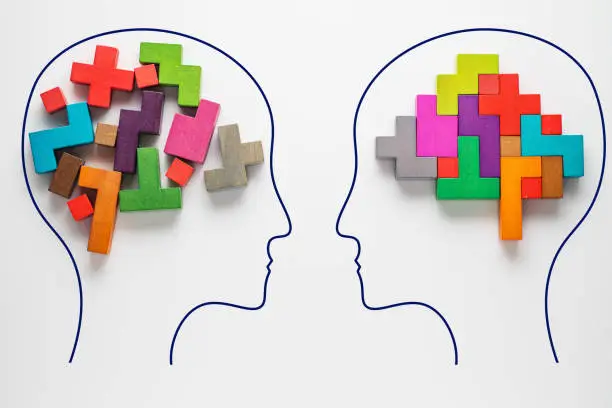
The skill of reasoning, a crucial step in problem-solving, scenario analysis, and decision-making, has long been linked to logic. But when most people think logic, do they think numbers? Many people associate logic with data analysis, algorithmic solutions, and mathematical equations. Given the importance of mathematics in education and its incorporation into disciplines like computer science and economics, this is not shocking. However, logic extends beyond mathematics and influences all facets of our existence, including verbal reasoning, moral judgment, and original problem-solving.
In addition to examining the intricate connection between logic and numbers, this article clarifies the ways in which logic affects other academic fields. We’ll look into the history of logic, how it came to be associated with reasoning and patterns, and how it has developed into a crucial aspect of contemporary life. By the conclusion, you’ll see that logic is a flexible instrument that influences how we think, learn, and develop—it’s much more than just numbers.
Understanding Logic: Is It All About Numbers?
A framework for organized thought is logic. Fundamentally, logic allows people to use deductive, inductive, or abductive reasoning to arrive at conclusions based on premises. Nevertheless, logic is not necessarily numerical, even though numbers are commonly used in logical reasoning.
1. Defining Logic
The science of reasoning that focuses on the rules that support sound arguments is called logic. It lays the groundwork for rational cognition by establishing guidelines for judging whether conclusions flow logically from premises.
2. Historical Roots of Logic
The oldest reasoning techniques were created by philosophers such as Aristotle in ancient Greece, which is where logic got its start. Classical logic, which did not necessarily rely on numbers, was based on Aristotle’s syllogisms, which are arguments derived from deductive reasoning. Eventually, formal logic, symbolic logic, and mathematical logic were added to this type of reasoning.
3. Mathematical Logic and Its Evolution
The late 19th century saw the emergence of mathematical logic, which combined conventional logical ideas with the accuracy of mathematics. This was a major change because logic was now more closely associated with symbols and numbers. The foundation for contemporary computer science was established by mathematical pioneers such as Gottlob Frege and George Boole, who strengthened the link between numerical systems and logic.
4. Philosophical Logic vs. Mathematical Logic
Abstract thinking is examined by philosophical logic, which focuses on ideas like truth, belief, and causality. It frequently tackles issues like “What is justice?” and “What constitutes moral behavior?” that have no quantifiable answers. On the other hand, mathematical logic emphasizes accuracy and clarity by using rigorous numerical concepts to answer problems.
5. Everyday Logic
Outside of the classroom, logic is a useful tool in daily life. From deciding what to cook for dinner to resolving workplace disputes, logic helps individuals approach situations rationally. These commonplace uses show that reasoning is not limited to mathematical computations.
Why Do Numbers Dominate Logical Thought?
In many situations, numbers are directly related to logical reasoning since they are widely accepted as symbols of accuracy and order. However, why do people frequently confuse numbers with logic? This perspective is influenced by a number of factors.
1. The Role of Education
The foundation of educational systems around the world is mathematics, and logical reasoning is frequently taught through mathematical puzzles. Numbers and thinking are strongly associated as a result of this emphasis on mathematical logic. The idea that logic is numerical is reinforced, for instance, when pupils learn how to solve equations or prove theorems.
2. Numbers as Universal Symbols
Numbers provide a global means of representing concepts and resolving issues that cut over linguistic boundaries. Because of their universality, numbers are frequently used in logical debates, especially in international fields like engineering, technology, and finance.
3. Binary Systems in Technology
Binary logic, which uses numbers (1s and 0s) as the foundation for computing, is a major component of modern technology. The connection between logic and numerical systems has been further reinforced by the development of computer science and programming.
4. The Influence of Data Science
In the era of big data, statistical analysis, predictive modeling, and data interpretation are frequently used in logical reasoning. The idea that logic and numbers are intertwined is maintained by the fact that businesses, governments, and scholars all rely on numerical data when making choices.
5. The Precision of Numbers
Numbers are commonly utilized in logical processes because they offer specific, unequivocal responses. They are a trustworthy instrument for logical thinking in domains like engineering and medicine because of their clarity, which removes any possibility of interpretation.
Logic in Non-Numeric Contexts
Even though many conversations on logic center on numbers, logic is equally significant in a myriad of non-numerical circumstances. These domains demonstrate the depth and adaptability of logical thinking.
1. Linguistic Logic
Since logic controls syntax, semantics, and argument structure, it is essential to linguistics. A vital component of literature, translation, and communication, logical reasoning guarantees that language is meaningful and coherent.
2. Ethical and Moral Logic
Logic is frequently used in philosophy to address ethical and moral quandaries. For example, logical reasoning that goes beyond mathematical computations is required to determine if it is appropriate to sacrifice one life in order to rescue many.
3. Creative Problem-Solving
Logic is used by writers, designers, and artists to organize their work. Plot development in literature follows a logical flow, whereas visual artists employ balance and symmetry to produce visually pleasing compositions.
4. Logical Fallacies in Arguments
Critical thinking is necessary to identify and steer clear of logical fallacies, such as strawman arguments and false dichotomies. Debates, the media, and casual discussions frequently contain these errors.
5. Logical Patterns in Nature
The symmetry of a butterfly’s wings or the spiral arrangement of leaves are two examples of how nature exhibits its innate logic through patterns and structures. The logical laws governing the natural world are reflected in these patterns.
Applications of Logic in Everyday Life
Almost every element of daily life is impacted by logic, which is not limited to scholarly or technical domains. Here are some real-world examples of how logic improves decision-making and problem-solving.
1. Financial Decisions
Whether it’s choosing investments or creating a monthly budget, managing personal finances requires rational priorities. Even though arithmetic is used, reasoning and trade-offs play a major role in the decision-making process.
2. Workplace Problem-Solving
Logic is useful in professional contexts for resolving conflicts, allocating resources, and organizing projects. Fairness and efficiency are guaranteed by logical frameworks.
3. Navigating Relationships
Logical thinking is necessary for relationships in order to comprehend viewpoints, communicate clearly, and settle disputes. People may assess circumstances and make well-informed decisions about their relationships with the aid of logical thinking.
4. Planning and Organization
Logic, not simply numbers, is involved in breaking down activities into manageable parts and prioritizing them. Logical thinking is used in everything from vacation planning to everyday task organization to ensure that goals are reached efficiently.
5. Critical Thinking in Media
It takes logical analysis to identify reliable information in the digital age. People can detect biases, assess the facts, and draw their own conclusions with the aid of logical reasoning.
FAQs
Is Logical Thinking Related to Math?
Yes, as both arithmetic and logical thinking need for systematic reasoning and problem-solving, they are related. But logic also holds true in domains other than mathematics, such as creativity, ethics, and language.
Why Do I Keep Thinking About Numbers?
Thinking about numbers all the time may be a result of anxiousness, a fascination with patterns, or even a need to solve problems. We frequently think about numbers since they are ingrained in our daily lives.
Can You Be Good at Logic but Not Math?
Of course. Reasoning and critical thinking are key components of logic, and they can be strong in domains other than mathematics, such as language, philosophy, or problem-solving.
What’s the Most Common Number People Think Of?
Because of its widespread use in culture and religion as well as its apparent distinctiveness, seven is frequently mentioned as the number that people think of the most.
Why Is 37 a Magic Number?
In recreational mathematics, the number 37 is regarded as “magic” because of its intriguing characteristics, such as being a special factor in particular patterns and puzzles.
Which Is the Luckiest Number?
Numbers like seven and eight are frequently considered lucky, though cultural views differ. While 8 represents prosperity in Chinese culture, 7 is viewed as lucky in Western culture.